In the recycling industry, industrial solid waste treatment and plastic pelletizing sectors, large waste fabrics, piled ton bags, bundled woven bags, films and paper represent high-volume, space-consuming flexible materials that pose major processing challenges. These materials are bulky and highly prone to tangling. Manual dismantling is time-consuming and labour-intensive. Conventional shredders often suffer from slipping, roller wrapping, material blockage and motor burnout. Poor pre-treatment directly impairs the quality and market value of downstream recycled products.
Developed to address widespread industry pain points, the TT Series twin-roll shredder is custom-engineered for soft and medium-hard materials. It handles films, woven bags, waste fabrics, ton bags and paper. Bulk bags, bundles and piles can be fed directly into the machine with no pre-cutting, dismantling or manual sorting required. The equipment completes coarse shredding, volume reduction and dispersion of large quantities of fabrics, ton bags and woven bags in a single pass. Unlike ordinary shredders, it not only solves shredding difficulties but also produces uniformly sized, clean and loose shredded materials free from long tangled strips. The high-quality output serves as premium feedstock for further processing and resource recovery, maximising the economic value of waste materials.
1. Core Processing Conditions: Direct Bulk Feeding of Raw Materials
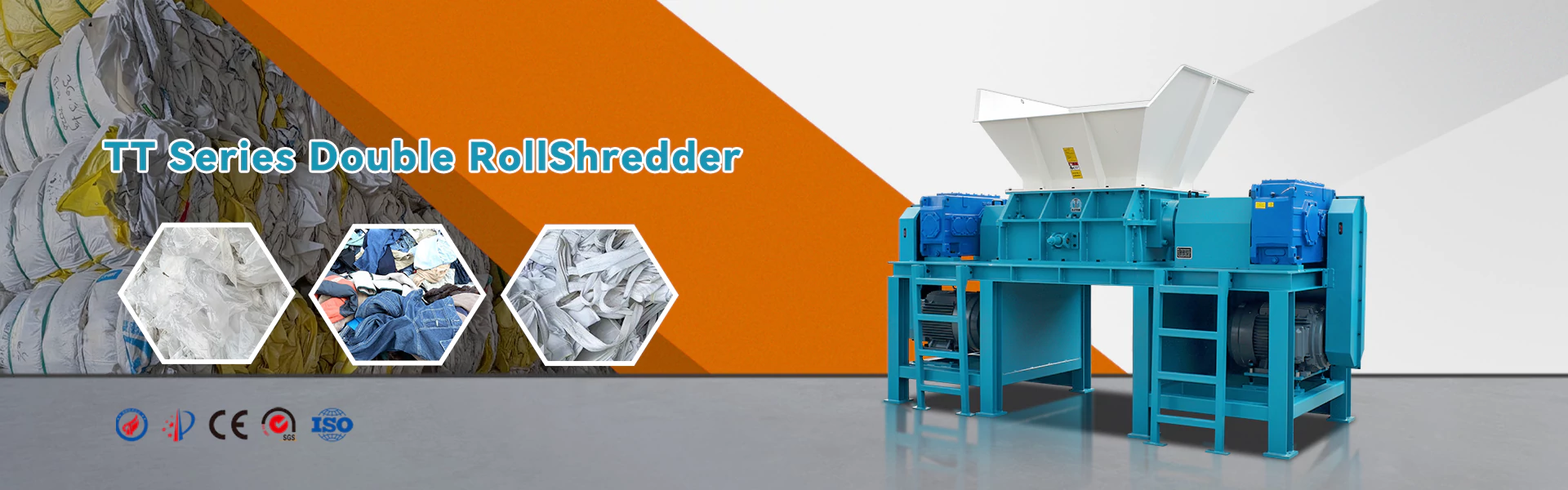
The machine accepts raw waste as received from recycling facilities without preliminary treatment, matching the high-efficiency workflow of factory production lines:
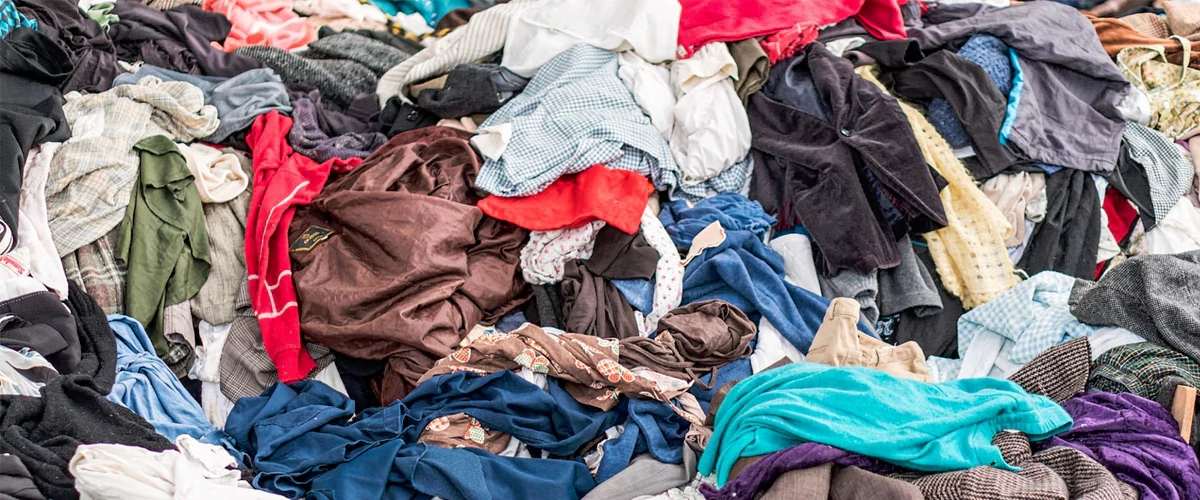
- Large waste fabrics: Industrial leftover cloth, full rolls of defective textiles, curtain fabric, non-woven trimmings, geotextiles and waste home textiles. Tangled bulky fabric piles can be fed directly.
- Waste ton bags (FIBC / bulk bags): Used bags complete with lifting loops, ropes and inner liners, powder packaging bags and mineral jumbo bags. Full bags can be loaded in batches without rope cutting or separation.
- Waste woven bags: Discarded snake skin bags, grain sacks, chemical packaging bags and express delivery woven sacks. Bags can be fed in piles for continuous high-volume shredding.
- Other compatible materials: Plastic films, paper and other soft solid wastes of medium hardness.
Raw materials can be fed in a rough, bulk manner. Manual dismantling, cutting and sorting are eliminated, cutting labour costs for pre-processing. It acts as core pre-treatment equipment for large-scale textile and plastic packaging waste recycling.
2. Working Principle & Hardware Configuration of TT Series Twin-Roll Shredder
The TT Series twin-roll shredder adopts a dual-rotor design driven by two motors. Two counter-rotating cutter rollers cut and tear materials through shearing force. It operates at a medium speed to balance throughput and low noise performance.
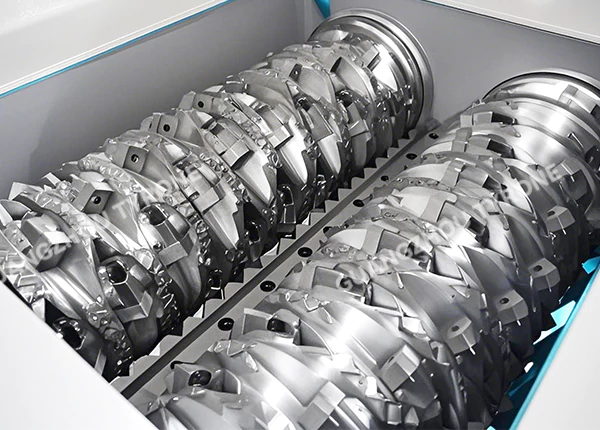
When bulky fluffy materials enter the feed hopper, cutter rollers actively grab and compress materials to prevent floating feed, slipping and slow feeding. Combined cutting, roller compression and powerful tearing break down large tangled waste into smaller pieces.
Cutter rollers can be customised according to processing requirements. The tooth profile and arrangement of cutters are optimised for fabrics, ton bags and woven bags, which feature high toughness and tangling tendency, to minimise fibre wrapping on rollers.
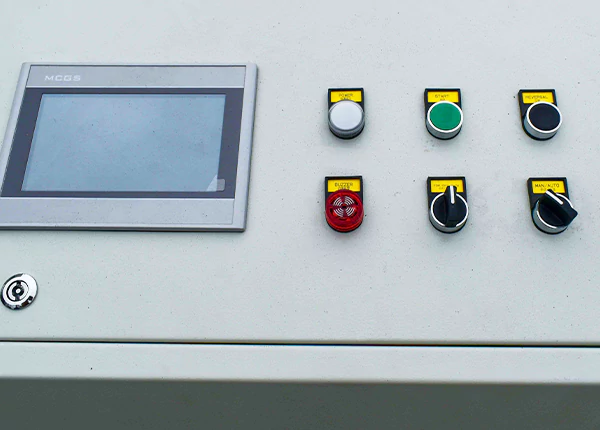
The machine is equipped with Siemens programmable control system, featuring start, stop, reverse rotation and automatic overload reversal protection. When overloaded by tough materials, the unit reverses to release stress and protect motors. It supports long-time continuous stable operation. Shredding particle size is adjustable to meet customer requirements.
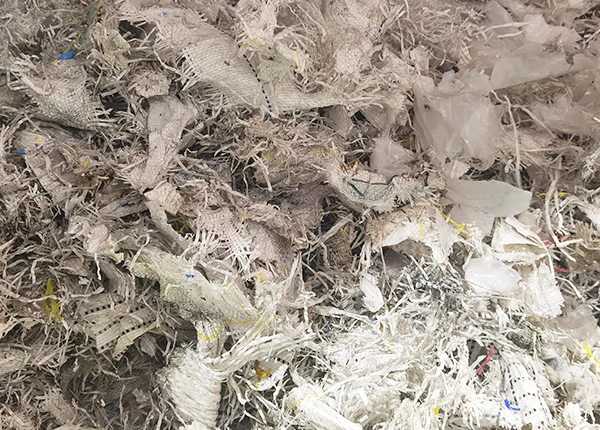
Output is uniform flakes and small chunks, free from long filaments, intact lumps and excessive fine powder. The shredded material remains loose and flows smoothly, meeting feed specifications for downstream processing equipment.
3. Post-Shredding Material Destinations, Processing Flow & Resource Value
Many processors only focus on shredding efficiency while ignoring the fact that shredded material quality determines waste selling price and recycling value. Shredded fabrics, ton bags and woven bags from the TT Series shredder feature regular shape, easy impurity removal and no agglomeration. The material can feed into mature recycling lines to convert waste into raw materials. Details are as follows:
3.1 Waste Woven Bags & Ton Bags
Ton bags and woven bags are mainly made of PP polypropylene, a high-value raw material in plastic recycling. Shredded output feeds into washing, impurity separation and pelletizing lines.
Processing workflow: Bulk material shredding → High-speed friction washing (removal of sediment and residual contents) → Float-sink separation (removal of foreign contaminants) → High-temperature dewatering → Melting & pelletizing → Finished PP pellets.
End applications: Recycled PP pellets are used to manufacture new woven bags, strapping bands, plastic twine, pipe fittings, injection moulded parts, plastic crates, waste bins and geosynthetic products.
Core value: Uniform shredded material allows thorough washing without trapped impurities. It improves washing efficiency and produces cleaner pellets with fewer contaminants for higher market prices. Volume reduction exceeds 70%, greatly cutting storage and transportation costs.
3.2 Large Waste Fabrics
Shredded industrial textiles and non-woven trimmings have four major recycling routes depending on material composition: fibre regeneration, filling materials, biomass fuel and recycled cotton.
Textile / chemical fibre scraps: Shreds go through fibre opening machines to produce regenerated chemical cotton and filling cotton for cushions, mattresses, sofa filling, labour protection supplies, thermal felts, geotextiles and greenhouse insulation materials.
Mixed industrial rags: Regular fabric shreds serve as raw material for industrial wiping cloths and textile auxiliaries, or are processed into sound insulation cotton, flame retardant fillers and road maintenance thermal materials. Waste fabric unsuitable for textile recycling can be used as biomass fuel for factory heat supply to realise solid waste reduction and resource recovery.
Core value: Whole large fabric pieces cannot be directly opened or used as filling materials. Uniform small shreds deliver consistent bulk density and excellent processability, turning low-value bulky waste into saleable recycled fibre materials.
3.3 Films & Paper
Shredded plastic films enter washing and pelletizing lines to produce recycled PE pellets for plastic bags, films and injection moulded products. Shredded paper can be supplied directly to paper mills as pulp stock for paper recycling.
4. Core Advantages of TT Series for Recycling Production
- Bulk feeding for high throughput and lower labour cost Bulk tonnes of waste can be fed directly with no pre-treatment. Manual dismantling and trimming are eliminated. Single-operator operation is available, suitable for small, medium and large recycling plants.
- Siemens intelligent electric control, anti-jamming and stable operation Siemens control system with automatic overload reversal prevents jamming and motor burnout. Medium-speed operation reduces noise. Custom cutter rollers are optimised for flexible materials to reduce roller wrapping and minimise production downtime.
- Premium shredded output to maximise waste value Unlike irregular long strips from ordinary shredders, our machine produces clean non-caking material with minimal fine powder. Impurities are easier to remove, processing loss is lower, and recycled pellets / regenerated cotton achieve superior quality and higher profit margins.
- Robust construction, low maintenance and favourable long-term ROI Heavy-duty steel frame withstands continuous heavy loads. Replaceable reversible cutters reduce spare part costs and maintenance downtime.
- Multi-purpose design for various soft & medium-hard solid wastes Besides large fabrics, ton bags and woven bags, it also processes plastic films and paper. One machine handles multiple waste streams for great versatility.
5. Complete Supporting Production Line (From Feeding to Finished Products)
As the front-end core pre-treatment unit, the TT twin-roll shredder integrates seamlessly with full recycling lines.
Workflow: Raw bulk feeding → TT twin-roll shredder dispersion & sizing → Conveyor feeding → Friction washing & impurity removal → Float-sink washing → Dewatering & drying → Pelletizing / fibre opening → Finished product storage & sales.
The whole line removes manual pre-processing steps, offering high automation, low production loss and stable product quality. It is an efficient mainstream solution for textile waste and plastic packaging recycling.
6. Conclusion: Shredding Is Not the Goal — Resource Upgrading Is
For waste fabric, ton bag, woven bag, film and paper recyclers, shredding pre-treatment is not only about volume reduction. Its true purpose is to raise waste value, improve finished product quality and boost production efficiency. Conventional shredders merely cut materials. With dual-roller shear-tearing structure, Siemens intelligent control and customisable cutter rollers, the TT Series twin-roll shredder delivers high-quality shredding and high-value recycling.
Bulk feeding cuts labour expenditure; intelligent control plus custom cutters guarantee stable operation; premium shredded output increases downstream product value. The equipment addresses the industry pain points of difficult flexible waste processing, low utilisation rate and thin profit margins, achieving solid waste reduction, harmless treatment and high-value resource utilisation.
We provide customised cutter rollers, machine models and production line solutions according to material types, capacity requirements, output specifications and downstream processes. One-stop services including equipment selection, site layout, installation, commissioning and lifetime after-sales support help recycling enterprises improve efficiency and profitability.