
Reading Guide
The difference between shredder and crusher
There are significant differences in functionality and usage between shredders and crushers, despite their similar names, their respective characteristics and application scenarios are different. Here are the main differences between the Machine.

1:Definition and Scope
Difference Between Crusher And Shredder?
Shredder: A shredder is a specific type of crusher that focuses on tearing, cutting, and shredding various materials through low speed, high torque, and speed difference between shafts. It is usually used to process materials with large volume and irregular shape, such as rubber heads, waste wood, hard plastics and other waste products.
Crusher: In addition to its application in the production of plastic products, plastic crushers are also widely used in the recycling process of waste plastics. Through the crushing process of plastic crushers, waste plastics can be broken down into small pieces, which are then processed through other equipment such as crushing and washing to ultimately obtain reusable plastic particles. This helps to reduce the pollution of waste plastics to the environment and achieve the resource utilization of waste plastics.
2:Working principle
Differences in Unit Principles
Shredder: The working principle of a shredder mainly relies on low speed and high torque. By the speed difference between the axes, the shredder can tear the material into smaller fragments. This working method enables the shredder to perform well in handling large and irregularly shaped materials.
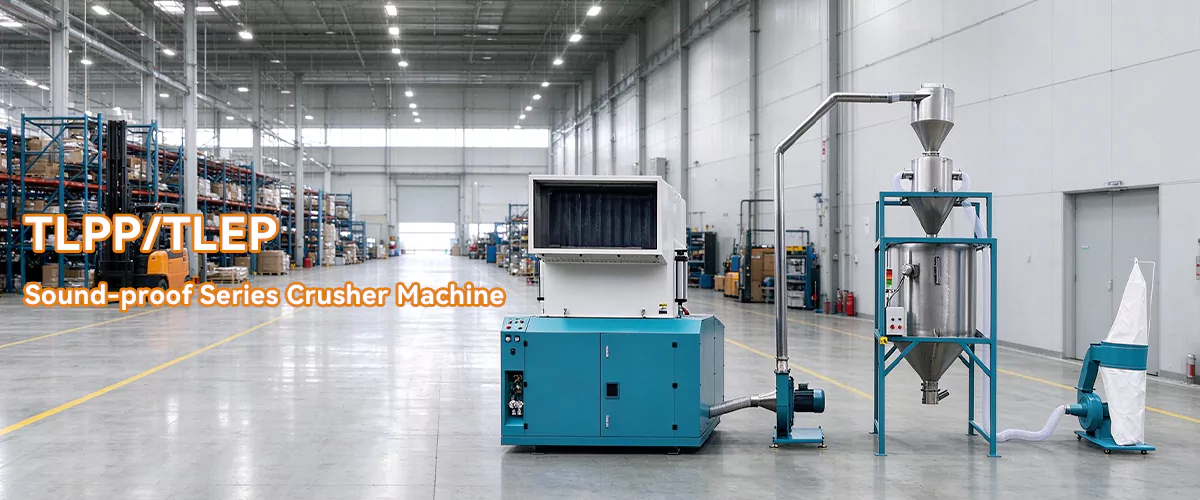
Crusher: Plastic crusher is a mechanical equipment used to crush various plastic products, mainly used to crush waste plastics, scraps or defective products generated during the production process for subsequent recycling or processing.
3:Material adaptability
The difference between crushing and shredding materials
Shredder: The shredder performs well in handling common materials such as metals and plastics in waste recycling stations. It can handle irregularly shaped and bulky materials, and break them into fragments that are easy to process later. In addition, shredders are also suitable for processing materials with toughness and elasticity, such as rubber.
Crusher: Plastic crusher is a commonly used plastic processing equipment, widely used in the production process of plastic products. Its main function is to break down large plastic waste into small pieces for subsequent processing and recycling.

4:Application scenarios
The difference between shredder and crusher application
A.Pre treatment of large/heavy plastic waste
This is the most classic application scenario of shredder. Many plastic products are bulky and cannot directly enter subsequent crushing or recycling equipment, and must be “roughly broken” by shredders.
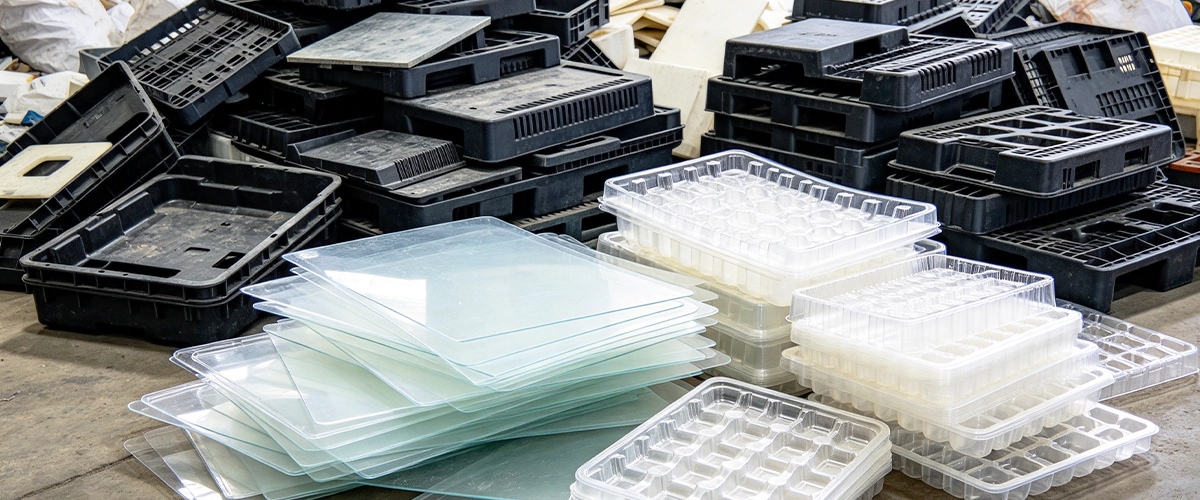
Plastic pallets&turnover boxes: The logistics industry generates a large amount of waste HDPE/PP pallets, which are large in volume and sturdy in structure. The shredder can easily tear them into palm sized fragments.
Large plastic containers&barrels: plastic inner liners or large plastic barrels made of 200L iron drums used in the chemical and food industries.
Automotive plastic components, such as bumpers, instrument panels, fuel tanks, etc., are not only large in size, but also often connected to a small number of metal parts. The strong torque of the shredder can cope with them.
Household appliance casings: Plastic casings of discarded refrigerators, washing machines, and air conditioners require a shredder for initial capacity reduction and decomposition before entering the fine crushing and sorting line.
B.Soft and easily entangled materials such as films, fibers, and woven bags
For soft plastics, ordinary crushers are prone to entanglement and blockage. The shredder, with its unique blade shaft design and powerful pulling force, can effectively handle such materials.
Agricultural film&mulching film: A large roll of agricultural film covered in soil and moisture, which can be torn open and broken by a shredder for subsequent cleaning.
Ton bags&woven bags: A large number of PP woven bags are wrapped together and can be broken down by a shredder.
Fishing nets and ropes: Abandoned fishing nets and ropes made of materials such as nylon are prone to entanglement and are typical objects of shredder processing.
C.Mixing plastic waste with miscellaneous materials
In garbage sorting lines or resource recycling plants, plastic is often mixed with other materials. The sturdy design of the shredder allows it to tolerate a certain proportion of foreign objects.
Plastic components in urban household waste: After preliminary sorting, mixed plastics containing small amounts of impurities (such as paper, wood chips, and metals) can be processed by shredders.
Electronic waste: Used computers, printers, etc. can be shredded as a whole (including plastic shells, circuit boards, cables) by a shredder, creating conditions for the subsequent separation of metal and plastic.
Cable and wire: A specially designed dual axis shredder can shred cables, separating copper, aluminum, and other metals from the plastic outer layer for easy recycling.
5:Core technical parameters and working principles
Shredder: Adopting a low-speed high torque design, the speed is usually between 300-600 revolutions per minute. Its working principle is to achieve tearing and crushing of large and irregular plastics through differential shear motion of biaxial or multi axial blades, and the final product is 10-100mm sheet-like coarse material. The advantage of this device is that it can effectively handle tough plastics and materials containing impurities, avoiding problems such as material entanglement and melting.
Crusher: The plastic crusher is driven by an electric motor to rotate the moving blade disc at high speed, creating relative motion between the moving blade and the fixed blade. It uses cutting, tearing, and other methods to crush plastic materials into small pieces or particles. Some models are also equipped with screens, which can control the particle size after crushing according to demand.
6:Summary of Key Differences
The difference between the two is mainly reflected in the processing object and crushing method: the shredder focuses on the non-uniform fragments generated by tearing behavior, while the crusher cuts and tears plastic waste into small pieces or particles through high-speed rotating blades.
The former is mostly used in the recycling industry, while the latter is the preferred choice for basic material processing. When selecting equipment, decisions should be made based on material characteristics and final product requirements.