Against the backdrop of global plastic reduction and low-carbon initiatives, this article illustrates the environmental benefits and recycling applications of PP woven bags. It addresses the pain points of conventional crushing equipment and introduces the advantages of the V-type shear crusher, helping recycling enterprises cut costs and carbon emissions. FAQs are attached at the end.
The United Nations Environment Programme (UNEP) states in its global report End Plastic Pollution that more than 400 million tons of plastics enter the market every year, nearly one-third of which are single-use packaging plastics. A large volume of plastic waste fails to enter formal recycling systems and ends up in the natural environment. The report also confirms that mechanical recycling is a technically mature, cost-effective and highly scalable solution for plastic reduction. If the global waste plastic chain of collection, crushing and reprocessing is improved, plastic pollution emissions can be cut by up to 80% by 2040.
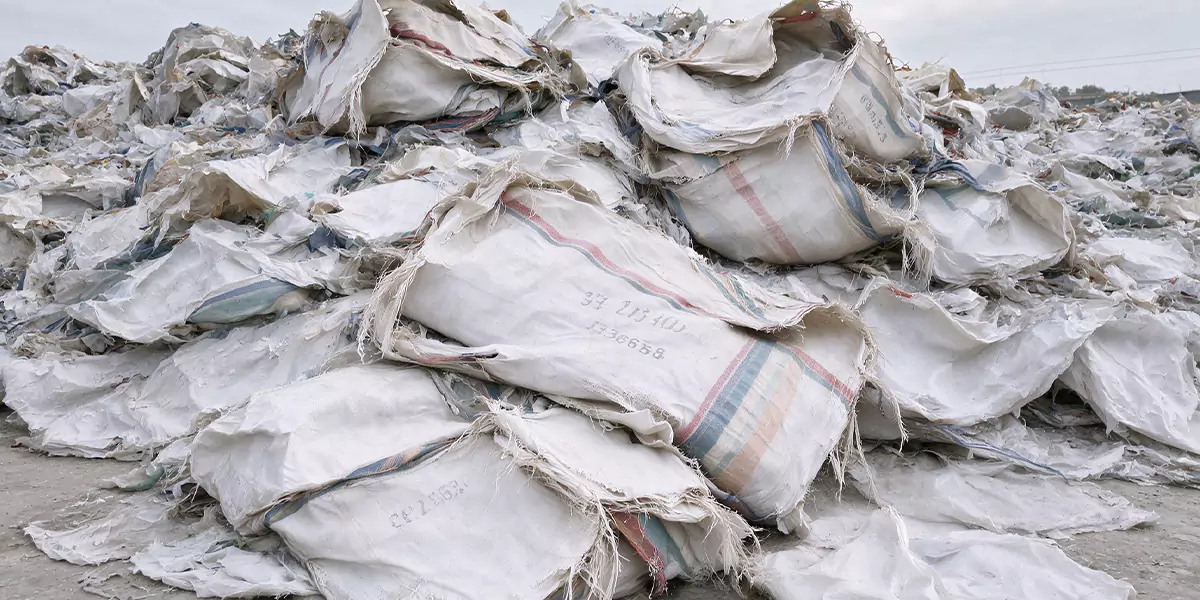
Plastic woven bags, commonly known as snake-skin bags or FIBC bulk bags, are mostly made of polypropylene (PP). They are widely used in grain storage, fertilizer & chemical industries, mining & building materials, and logistics packaging. Featuring high strength, light weight and low cost, they underpin the circulation of bulk commodities, yet create massive solid waste pressure. PP is non-biodegradable. If discarded randomly, it persists in soil and water for decades, generating microplastic pollution and threatening ecosystem safety.
Why Promote PP Woven Bag Recycling
Waste PP woven bags are not useless trash but valuable recyclable resources. Standardized recycling delivers multiple benefits:
1.Reduce virgin plastic production and carbon emissions:
Recycling one ton of PP woven bags greatly cuts crude oil consumption. Compared with virgin plastic manufacturing, re-granulation consumes far less energy and emits fewer greenhouse gases, aligning with low-carbon targets.
2.Ease solid waste pressure and prevent pollution:
Avoid land occupation, leachate and dioxin emissions from landfilling or incineration, and stop microplastics from entering the environment.
3.Complete the circular industrial chain and create economic value:
After crushing, washing and pelletizing, waste woven bags become recycled PP pellets for plastic manufacturing, forming a closed loop and bringing steady profits to recyclers and pellet plants.
What Can Recycled PP Woven Bags Be Repurposed Into
Recycled PP material after crushing, sorting, washing, dewatering and pelletizing has a wide range of applications:
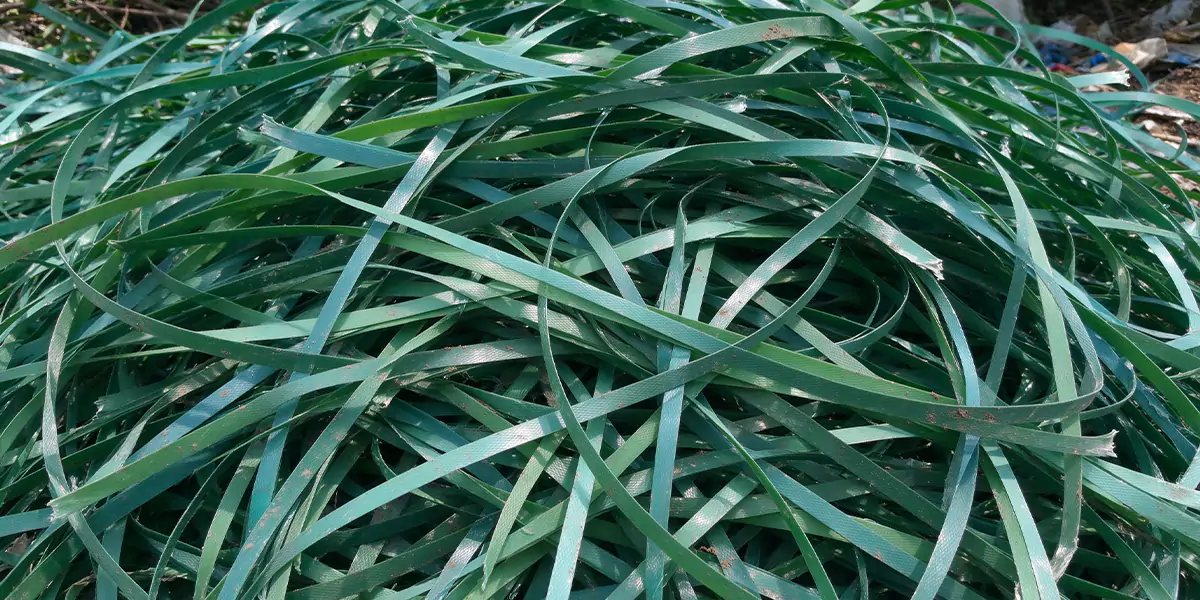
- New plastic woven bags, small packaging sacks, strapping bands
- Plastic pallets, turnover crates, storage sheets
- Injection-molded parts: plastic tables & chairs, tool boxes, automotive interior components
- Geotextiles, impermeable non-woven fabrics, garden seedling pots
Core Preprocessing Equipment for PP Woven Bag Recycling: V-Series V-Type Crusher
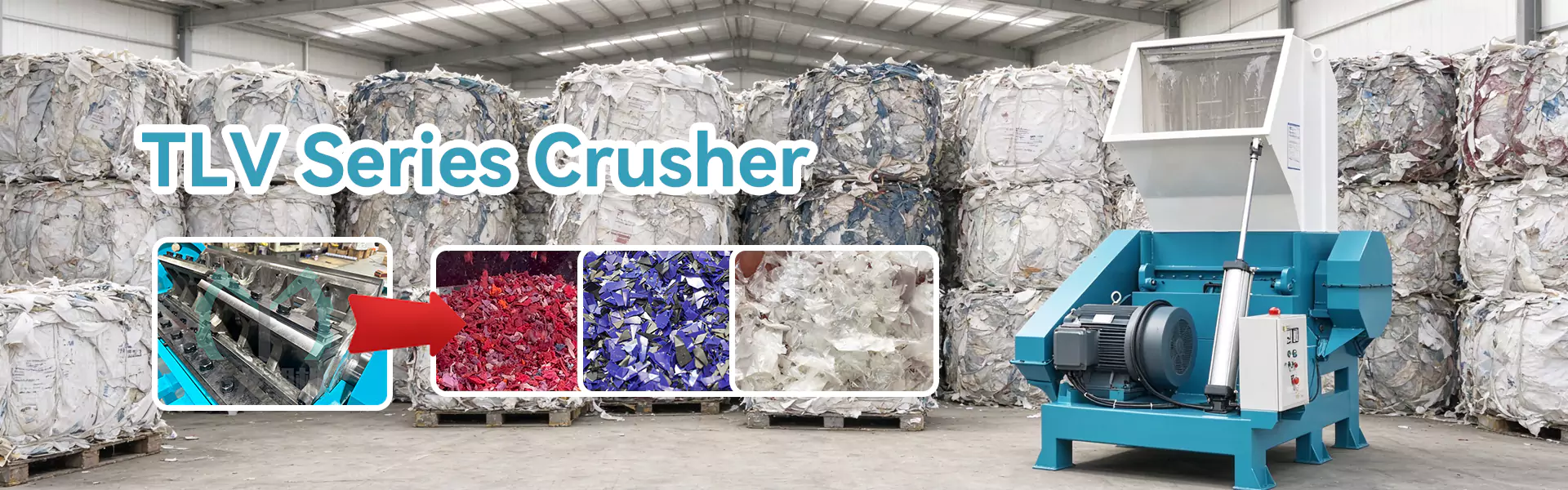
Woven bags are thin and prone to wrapping, making them notoriously difficult to process in waste plastic recycling. Traditional shredders tear materials, resulting in stringy outputs, heavy dust and high energy consumption, which complicates downstream washing and pelletizing. To solve these pain points, we offer the V-Series V-Type Crusher.
The V-Series Crusher is suitable for recycling PP & PE films, sheets, PET bottles and more. Adopting a V-shaped cutter frame, it cuts materials by shearing instead of tearing. Output granules have sharp edges with minimal dust, lowering energy consumption and boosting throughput.
For PP woven bag crushing, the large oblique staggered blade design is optional. The split housing and external independent bearing seats prevent lubricant leakage into the crushing chamber (avoiding material contamination) and block dust from entering bearings to extend service life. Wet crushing is supported to raise output. It can also be matched with friction washers and screw feeders for primary dust removal and washing.
Frequently Asked Questions
Q1: What is the biggest challenge of PP woven bag recycling?
A1: Woven bags are thin and highly flexible, easy to wrap around cutters during crushing. They are often contaminated with sediment, grain residue and fertilizer residue. A proper shear-type crusher paired with washing equipment is critical for stable operation.
Q2: Does the V-type crusher offer obvious power-saving advantages over ordinary crushers?
A2: Yes. The shearing principle replaces tearing. It does not require continuous high pulling force, delivering lower energy consumption and less dust at the same throughput, cutting electricity costs over long runs.
Q3: What auxiliary machines can be matched with this crusher?
A3: Screw feeders and friction washers are optional, realizing integrated feeding, crushing, pre-washing and dedusting for woven bag recycling lines.
Q4: Is wet crushing available? What are its benefits?
A4: Wet crushing is supported. Water suppresses dust, washes away surface dirt on woven bags in advance to improve granule cleanliness, reduces cutter heat buildup and increases output.