1. Policy Context: Plastic Recycling – A Shared Green Agenda for China and the World
The recycling of chemical blue drums is no longer an optional green initiative for enterprises, but a mandatory task for industrial compliance and low-carbon transition.
Domestically, China’s dual carbon goals target carbon peaking before 2030 and carbon neutrality before 2060. Virgin plastic heavily relies on petroleum refining, making it a key sector for carbon emission control. The Solid Waste Pollution Prevention and Control Law sets the core principles of solid waste management: reduction, recycling and harmless treatment. The 14th Five-Year Plan for Circular Economy and special action plans for plastic pollution control continuously promote full-chain closed-loop management of plastics, and strongly encourage the recycling and regeneration of industrial plastic packaging. For chemical manufacturers, solid waste disposal companies and recycling processors, the proper handling of waste chemical blue drums helps avoid legal risks arising from non-compliant disposal of hazardous or general solid waste. It also serves as a core path to build green factories, complete ESG disclosure, maintain carbon accounting records and meet low-carbon assessment targets.
Internationally, EU packaging regulations keep raising the mandatory recycled plastic content and impose strict requirements on traceability, carbon footprint and recycled proportion for packaging plastics. The global plastic pollution treaty continues to govern cross-border flows of plastic waste and restrict disorderly transboundary shipment of scrap plastics. An increasing number of foreign trade orders and overseas projects take recycled material traceability and low-carbon data as market access thresholds. Against this backdrop, investing sufficient resources, time and effort in the recycling and regeneration of chemical blue drums is not merely an environmental action, but a strategic choice to comply with global sustainable trade rules and build long-term industrial competitiveness.
2. Why We Devote Significant Time and Effort to Recycling Chemical Blue Drums
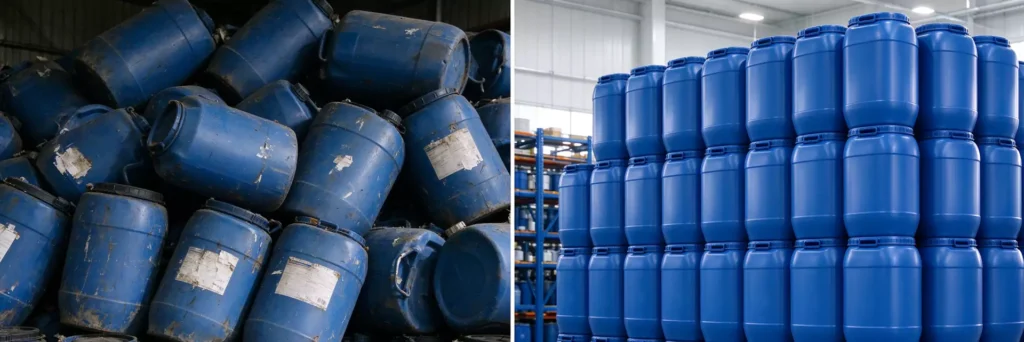
HDPE blue drums are heavy-duty packaging containers widely used in the chemical industry. Featuring thick walls, acid and alkali resistance and high toughness, they are commonly used to hold additives and liquid raw materials. Once their service life ends, disposal challenges emerge. HDPE is chemically stable and can take decades to degrade in natural environments. Landfilling may cause residual chemicals and additives in the drums to leach continuously, contaminating soil and groundwater. Open-air incineration releases chlorides and volatile toxic fumes, resulting in air pollution.
From a resource perspective, producing one ton of virgin HDPE consumes substantial crude oil and generates high carbon emissions. Discarded chemical blue drums are high-quality rigid HDPE feedstock. If abandoned, they become costly solid waste; with standardized recycling, they turn into valuable recyclable resources. However, the hollow, thick-walled and elastic structure of blue drums leads to rebound issues, creating high barriers in pre-treatment, crushing and sorting, which may easily break the recycling chain. To achieve genuine closed-loop regeneration, thorough control over the whole workflow is required, including residual liquid draining, sorting, crushing and impurity separation. This keeps waste drums away from illegal dumping and simple incineration, reintroduces them into industrial cycles, cuts fossil fuel consumption and reduces carbon emissions across the industrial chain.
3. Why Tyrone Developed the TLD Heavy Duty Crusher
During years of practice in rigid plastic recycling and on-site project delivery, we have identified widespread industry pain points. Chemical blue drums are highly tough, and their hollow structure easily causes material rebound. Conventional crushers adopt closed housings. Once blockage or jamming occurs, disassembly for cleaning, blade replacement and screen maintenance is time-consuming. The spindle and main shaft suffer continuous unstable impact, accelerating wear on consumable parts. Frequent downtime drags down output and drives up operation and maintenance costs. Traditional constant-frequency motors run at full power regardless of material feed volume, leading to the “large motor for small load” problem and high power consumption per ton of material, conflicting with the current direction of low-carbon and cost reduction.
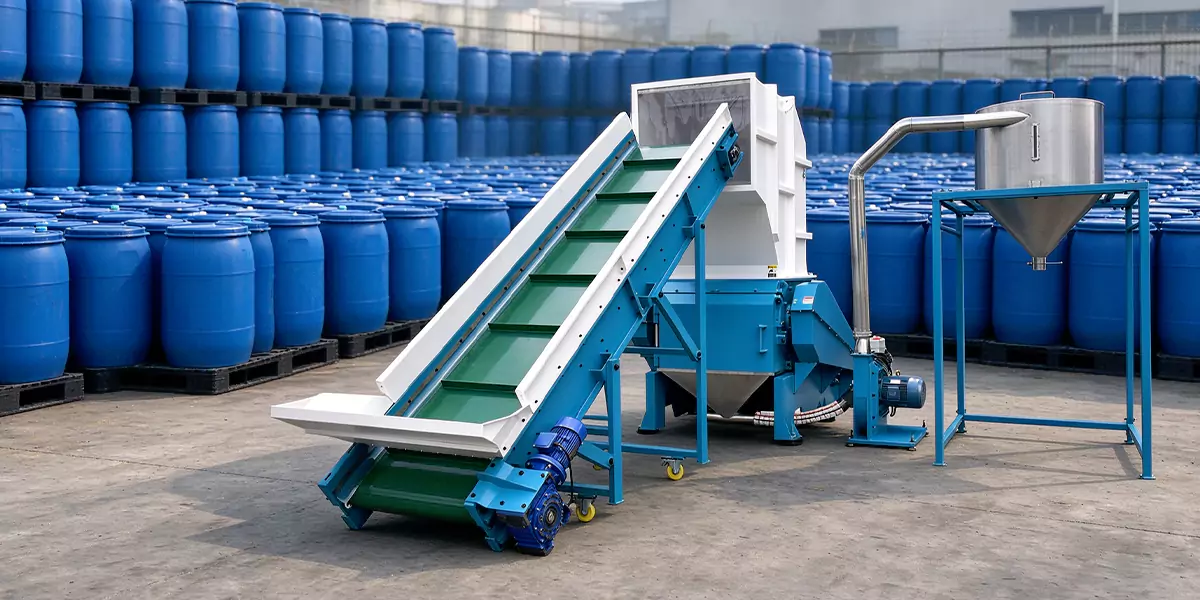
Rooted in real on-site working conditions and customer pain points, we launched dedicated R&D to develop the TLD Heavy Duty Crusher tailored for thick-walled hollow rigid plastics.
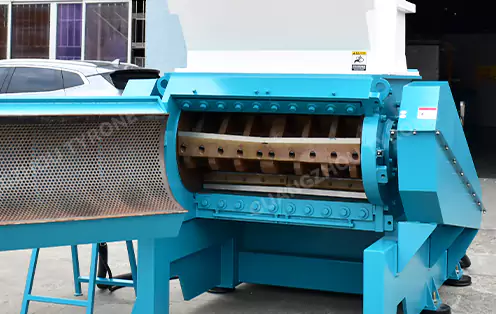
The core design features a split-opening housing. The maintenance compartment can be quickly opened for easy access to the blade set, screen and cavity for cleaning, blade replacement and fault troubleshooting, greatly shortening maintenance downtime and boosting effective production hours. Equipped with a customized V-shaped cutter set, optimized cutting angles are designed for the high toughness and rebound tendency of HDPE blue drums to suppress material bouncing. Whole drums can be fed directly without pre-cutting or flattening, reducing upstream pre-processing input.
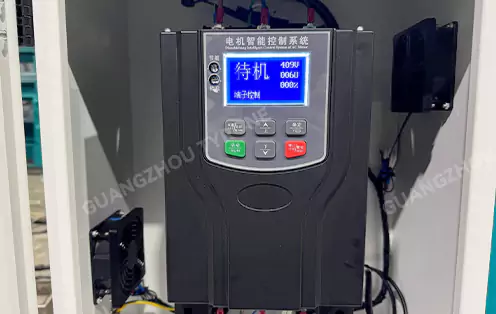
The machine is fitted with the 3rd-Generation Intelligent Dynamic Energy-saving System, the intelligent control core and a key technical differentiator from traditional crushers. Multiple high-precision sensors collect real-time data including feeding status, cavity load, motor current, spindle torque and bearing temperature. Built-in algorithms dynamically adjust power output, torque and rotation speed according to feed volume, drum wall thickness and cutting resistance. When feeding is sufficient and cutting resistance is high, torque rises to guarantee stable crushing. When feeding is sparse or the machine runs idle, power is automatically reduced to eliminate useless energy consumption. Verified by numerous field tests, the system reduces overall energy consumption by 20%-60% compared with conventional constant-frequency crushers. The energy-saving advantage is especially prominent for blue drum recycling, which features intermittent feeding and fluctuating load.
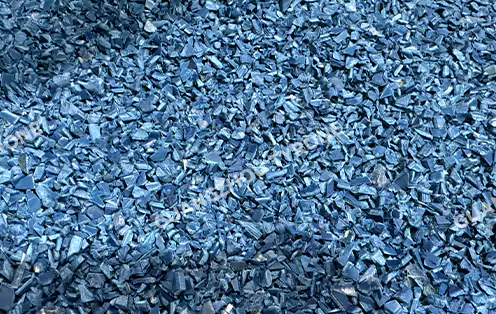
The crusher turns bulky, intact chemical blue drums into uniformly sized HDPE flakes, laying a solid foundation for subsequent washing, hot washing, sorting and pelletizing, ensuring flake purity and minimizing impurity contamination. This is why we prioritize this solution for blue drum recycling customers: purpose-built for blue drum working conditions, it delivers easy maintenance, stable continuous operation and controllable energy consumption, cutting comprehensive operating costs for the whole recycling line starting from the crushing stage.
4. Value of Crushed Chemical Blue Drum Flakes
After crushing, washing, impurity removal and melt pelletizing, blue drum flakes are converted into high-quality HDPE recycled pellets with three dimensions of value:
 Low-carbon & Environmental Value: Recycled pellets replace virgin plastic, reducing carbon emissions from crude oil extraction and refining and lowering the carbon footprint of projects. They help enterprises complete carbon accounting, green factory audits and ESG reporting to advance sustainable development.
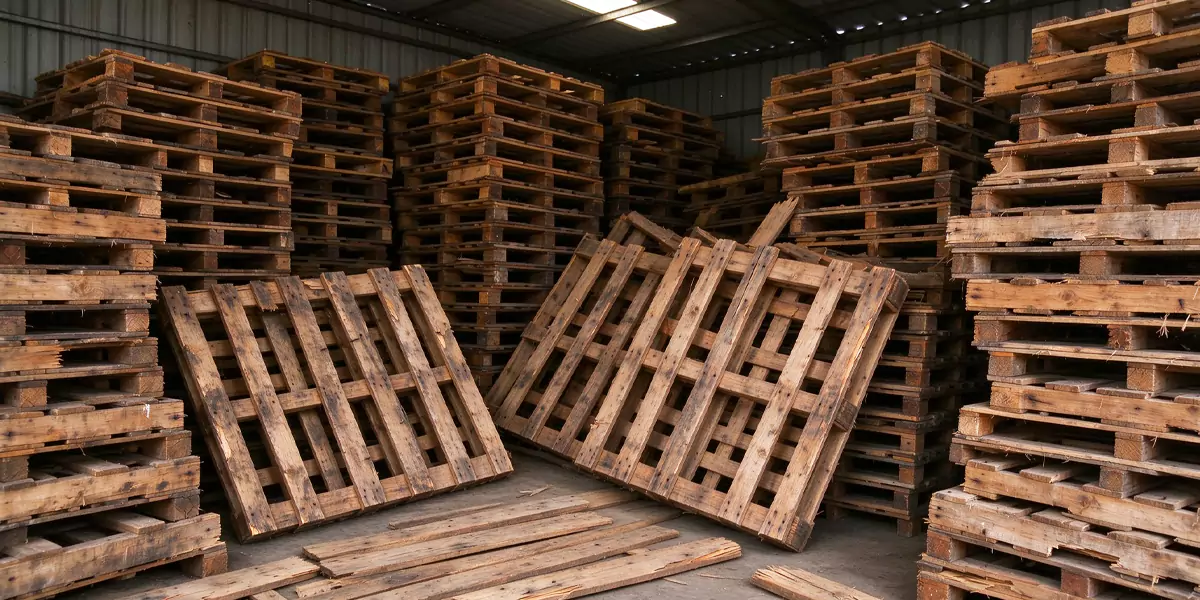
Industrial Closed-loop Value: HDPE recycled pellets feature excellent chemical resistance and toughness. They can be blow-molded into new chemical drums, injection-molded into plastic pallets and crates, or extruded into water supply pipes, sheets and profiles. This forms a complete industrial closed loop: raw material packaging → waste drum recycling → crushing and regeneration → new finished products.
Commercial Value: Uniform, clean and stable recycled pellets enjoy high recognition and liquidity in the recycled plastic market. They transform waste chemical blue drums from a pure solid waste disposal expense into standardized, tradable and profitable feedstock, reshaping the profit margin of recycling projects.
Conclusion
Investing time, labor and processes in chemical blue drum recycling is not merely handling industrial solid waste. It is a long-term commitment to China’s circular economy and dual carbon strategy, as well as global plastic governance rules. Developed to solve real customer pain points, the Tyrone TLD Heavy Duty Crusher addresses common challenges in blue drum crushing including jamming, material bouncing, high energy consumption and difficult maintenance. With its split-opening housing, V-shaped cutter set and 3rd-Generation Intelligent Dynamic Energy-saving System, it provides a stable, energy-efficient and easy-to-maintain crushing solution to unlock the critical stage of resource recovery. It keeps waste drums away from landfill and incineration, allowing them to re-enter industrial manufacturing as recycled pellets and build a low-energy, sustainable green ecosystem for plastic circulation.